
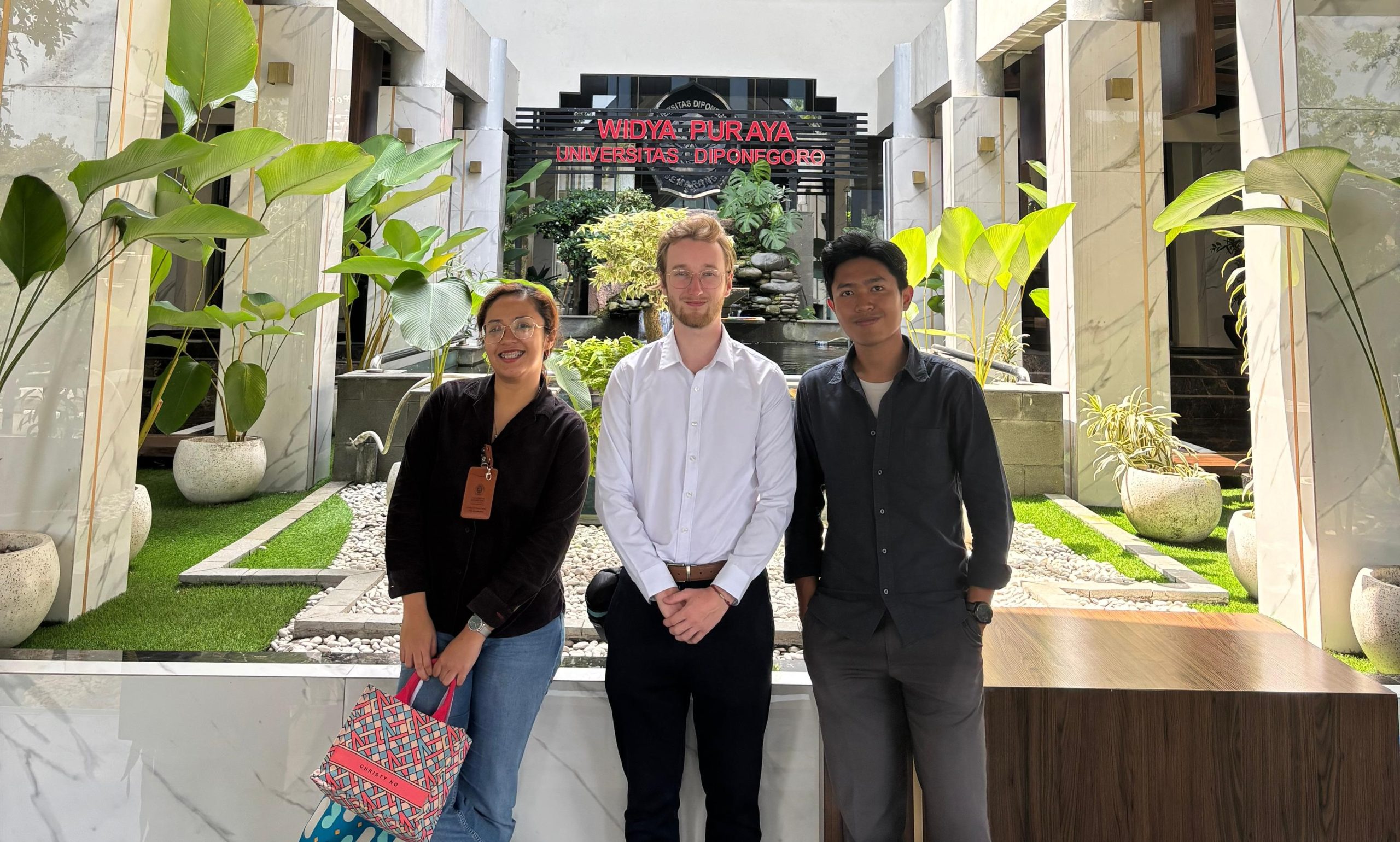
Undip, Semarang (10/04/2026) – The Postgraduate School of Diponegoro University collaborates with Saxion University of Applied Science, conducting field research towards historical canals from Dutch colonization at 3 Javanese Coast, which consist of Semarang, Surabaya, and Jakarta. The group of Sustainable Areas and Soil Transitions (SAST) accompanied this research.
This event is part of the International Research titled Adaptive Transformation of Historical Canals and Quay Walls in Java, Indonesia, which was initiated by the SAST. This research focuses on sustainable regional transformation and climate change, and developed environmental management.
This research is guided by the Postgraduate School of Undip lecturer Chely Novia Bramiana, S.T., BBE, M.Sc., Ph.D. She involved many interdisciplinary students, including Muhammad Helmi Candra (Master of Environmental Sciences), Ghaitsa Aisy Nabillah, and Firmansyah Adhitiya Busnamy, whereas Bjorn Hettema from Saxion University attended as the lead researcher.
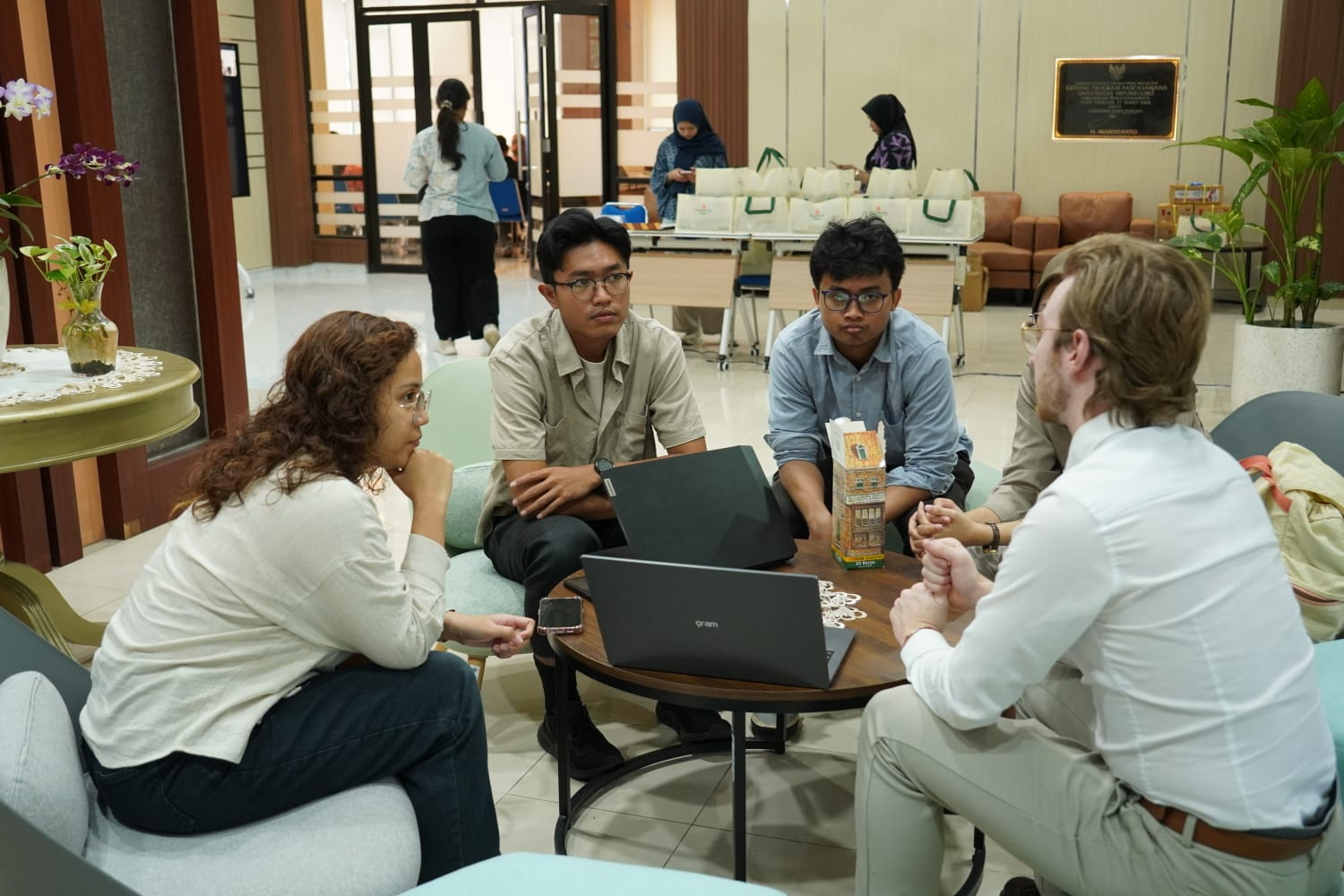
SPs Undip and Saxion University of Applied Sciences conducting research discussion at the Postgraduate School of Diponegoro University
This research highlighted the canal system and Semarang Old City Embankment, which were established during the VOC government era in the 17th century until the 18th century. Back then, these canals were used as a defensive fortress, watercraft, drainage, and to sustain trading activity.
In Semarang, the survey focuses on Semarang Old City, which has a historical canal network as part of the water control system. In Jakarta. This research was conducted at the old city of Batavia canal system. In Surabaya. This study focuses on the canal and conduit in the regional north city, which was developed as the center of the colonial trade center.
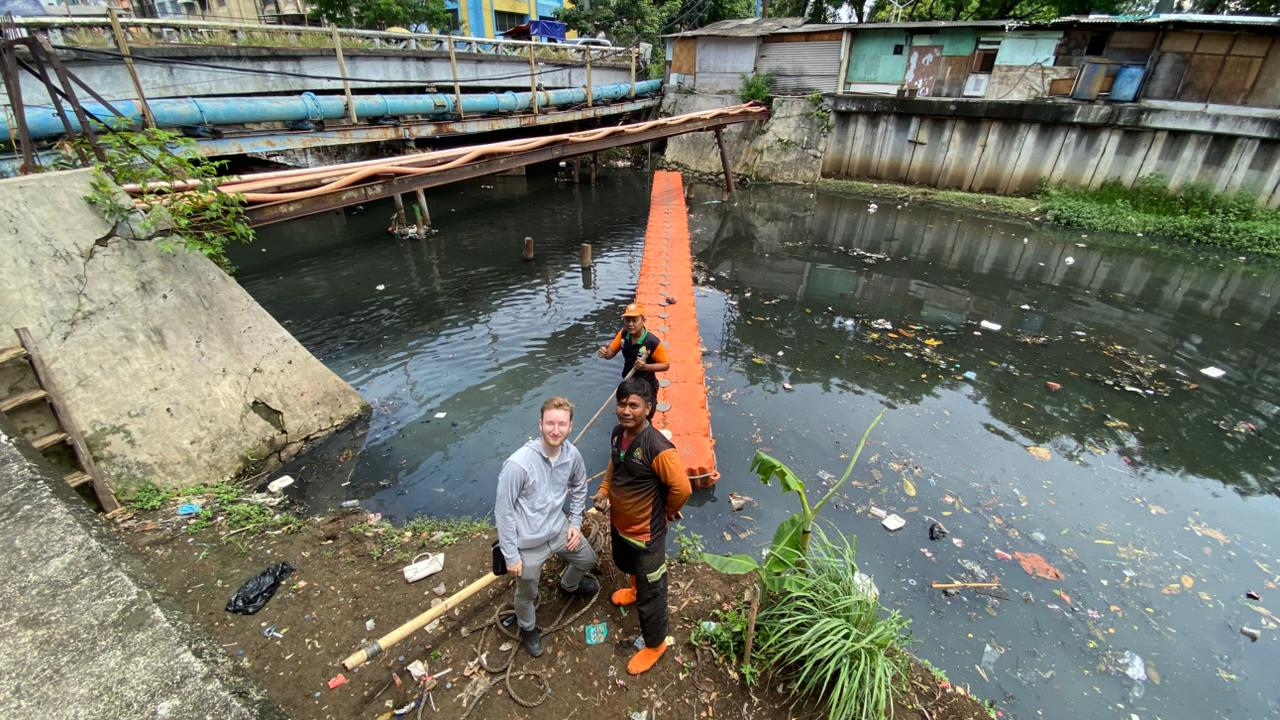
Through this direct observation, social mapping, and technical and functional analysis, researcher teams are identifying challenges that are faced by these canals, such as land subsidence, structural degradation, and functional changes due to the development of modern cities.
This research aims to formulate adaptive transformation strategies that can preserve historical value while enhancing the function of canals as resilient and sustainable urban infrastructure. This collaboration is also intended to strengthen Undip’s international network in urban water system management based on global experience and the local context of Indonesia. (SPs Undip PR – DAP)